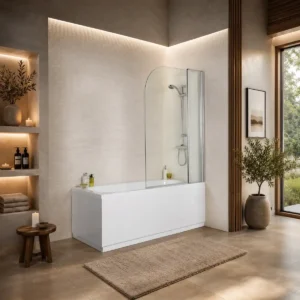
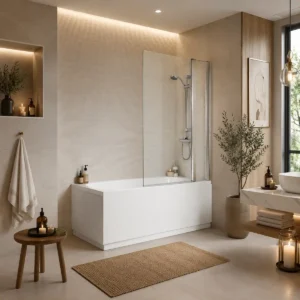
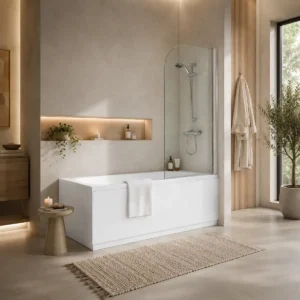
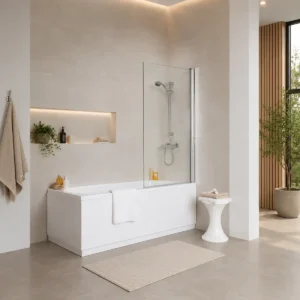
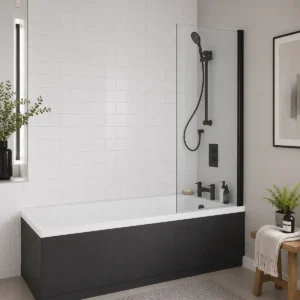
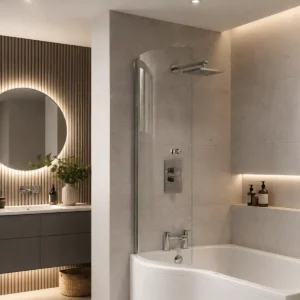
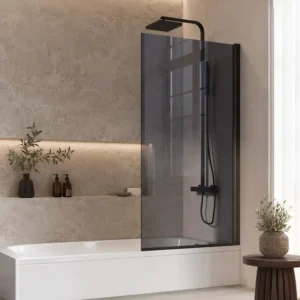
Shop hinged bath screens with glass panels that move for easier access and cleaning. Compare the screen width and height, opening direction, swing clearance, handing, bath-rim contact, wall adjustment, safety-glass specification and supplied seals before selecting a compatible model.
-
Bath Screens, Baths, Chrome Bath Screens, Hinged Bath Screens, L-Shaped Shower Bath Screens, Square Bath Screens
Kartell Elite L-Shaped Chrome Shower Bath Screen
Original price was: £258.00.
Our Price: £132.99Current price is: £132.99. -
Bath Screens, Baths, Chrome Bath Screens, Hinged Bath Screens, L-Shaped Shower Bath Screens
Kartell Elite Towel Bar L-Shaped Chrome Shower Bath Screen
Original price was: £285.00.
Our Price: £151.49Current price is: £151.49. -
Bath Screens, Baths, Chrome Bath Screens, Curved Bath Screens, Hinged Bath Screens
Kartell Koncept 1400 x 1000mm Radius Edge Extended Bath Screen
Original price was: £215.00.
Our Price: £106.49Current price is: £106.49. -
Bath Screens, Baths, Chrome Bath Screens, Hinged Bath Screens, Square Bath Screens
Kartell Koncept 1400 x 1000mm Square Edge Extended Bath Screen
Original price was: £215.00.
Our Price: £106.49Current price is: £106.49. -
Bath Screens, Baths, Chrome Bath Screens, Curved Bath Screens, Hinged Bath Screens
Kartell Koncept 1400 x 780mm Radius Hinged Bath Screen
Original price was: £158.00.
Our Price: £79.75Current price is: £79.75. -
Bath Screens, Baths, Chrome Bath Screens, Hinged Bath Screens, Square Bath Screens
Kartell Koncept 1400 x 780mm Square Hinged Bath Screen
Original price was: £158.00.
Our Price: £79.75Current price is: £79.75. -
Bath Screens, Baths, Black Bath Screens, Hinged Bath Screens, Square Bath Screens
Kartell Matt Black Krittal Panel Designer Bath Screen
Original price was: £207.00.
Our Price: £109.99Current price is: £109.99. -
Bath Screens, Baths, Black Bath Screens, Curved Bath Screens, Hinged Bath Screens
Kartell Nero Curved Top Matt Black Hinged 1400mm Bath Screen
Original price was: £161.00.
Our Price: £86.49Current price is: £86.49. -
Bath Screens, Baths, Black Bath Screens, Hinged Bath Screens, L-Shaped Shower Bath Screens
Kartell Nero Matt Black Frame L Shaped Shower Bath Screen
Original price was: £256.00.
Our Price: £142.49Current price is: £142.49. -
Bath Screens, Baths, Black Bath Screens, Hinged Bath Screens, Square Bath Screens
Kartell Nero Square Edge Matt Black Hinged 1400mm Bath Screen
Original price was: £161.00.
Our Price: £86.49Current price is: £86.49. -
Bath Screens, Baths, Chrome Bath Screens, Hinged Bath Screens, P-Shaped Shower Bath Screens
Kartell Oblique P Shaped Shower Bath Screen 6mm Glass
Original price was: £207.00.
Our Price: £117.49Current price is: £117.49. -
Bath Screens, Baths, Black Bath Screens, Hinged Bath Screens, Square Bath Screens
Scudo S6 1400 x 800mm Tinted Black Glass Bath Screen
Original price was: £214.00.
Our Price: £104.99Current price is: £104.99.