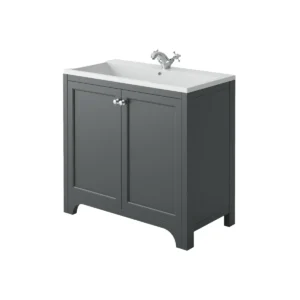
Wood effect furniture can soften hard tiles, and oak floor standing vanity units bring warmth to the basin area without making the room feel dark. Oak pairs naturally with white ceramics, brushed brass taps, stone effect tiles and neutral walls, making it a versatile choice for modern and relaxed schemes. The floor standing cabinet also provides useful storage while covering pipework below the basin. Match your oak-coloured bathroom floor standing vanity unit with nearby mirrors, shelves or tall storage for a more connected look.

Filter

TAILS’ TIMBER TAKE

Give the basin area natural depth

Oak floor standing vanity units bring visible grain, warm colour and useful storage to the basin area. Choose one when you want bathroom furniture to feel softer and more characterful than a plain painted cabinet, with a grounded profile that gives the room a settled, furniture-led appearance.

Are Oak Floor Standing Vanity Units Right for Your Bathroom?

Compare timber tone, room balance and everyday use

Oak Furniture Is a Strong Choice If

Your bathroom feels too clinical

Oak introduces warmth and visible texture beside white basins, baths and toilets. It can soften a room dominated by hard ceramic surfaces, making the wash area feel more welcoming without relying on bold colours or heavily patterned finishes.

You favour natural-looking materials

An oak finish works comfortably with stone-effect tiles, linen textures, woven baskets and muted paint colours. This makes it especially suitable for relaxed contemporary, Scandinavian-inspired or country-influenced bathrooms where visible grain forms part of the overall design.

You want furniture with presence

A floor standing cabinet creates a substantial block beneath the basin and makes the vanity feel like a permanent piece of furniture. This can balance tall mirrors, panelled walls or larger rooms where a slim pedestal might appear visually underpowered.

Another Finish or Format May Work Better If

The room already contains several woods

Adding another oak tone can make the scheme look unsettled when the floor, door, shelves and mirror already use different timbers. A painted cabinet may give those existing wood finishes more breathing space and create a cleaner visual hierarchy.

You want a crisp monochrome scheme

Oak naturally adds warmth, which may conflict with a bathroom designed around cool greys, sharp black accents and bright white surfaces. A black, white or charcoal vanity can preserve a more graphic, controlled appearance with less tonal variation.

The cabinet base may stay wet

Repeated pooling around the lower edges can be harder on floor standing furniture, regardless of its decorative finish. A wall-hung unit may be more suitable beside an open shower or in a room where splashes regularly reach the basin cabinet.

Oak Floor Standing Vanity Unit FAQs

Oak shades, moisture care and matching furniture

  • Will the oak colour match the product image?

    It should be broadly representative, but colour can appear different under warm or cool lighting and on different screens. Grain pattern and tone may also vary according to the material and manufacturing process used for the individual cabinet.

  • How should the lower edges be protected?

    Wipe away splashes and standing water promptly, particularly around the plinth, doors and exposed joints. Use only suitable cleaning products and maintain any seals specified by the manufacturer, as repeated moisture exposure can affect bathroom furniture over time.

  • Can I match it with other oak furniture?

    Yes, but identical colour is not guaranteed across different ranges. Oak finishes can lean pale, golden, honey-toned, greyed or smoked, so compare samples or detailed images and repeat similar undertones rather than relying on the word “oak” alone.

DESIGNER’S NOTE

Let the oak grain lead the scheme by pairing it with warm white, limestone tones and simple brushed fittings, avoiding several competing timber shades around the basin.