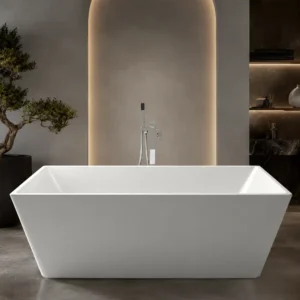
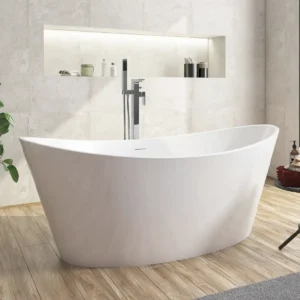
Shop freestanding baths for a more distinctive alternative to a conventional fitted bath. Our range includes compact designs for tighter bathrooms alongside larger freestanding baths with more generous proportions. We’d start with the space you have and how the bath feels to use, then choose the style that suits the room.
-
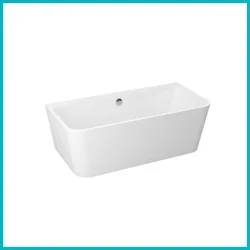
Back to Wall Freestanding Baths
1 product -
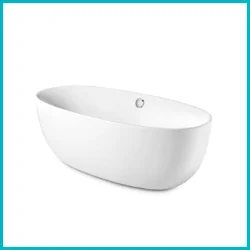
Oval Freestanding Baths
12 products -

Square Freestanding Baths
1 product -
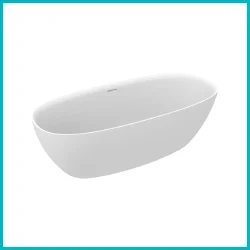
Curved Freestanding Baths
12 products -
1500mm Double Ended Baths, Baths, Curved Freestanding Baths, Double Ended Baths, Freestanding Baths, Oval Freestanding Baths, Round Double Ended Baths
Kartell Coast 1500 x 750mm Freestanding Double-End Oval Bath
Original price was: £1,593.00.
Our Price: £753.99Current price is: £753.99. -
1700mm Double Ended Baths, Baths, Curved Freestanding Baths, Double Ended Baths, Freestanding Baths, Oval Freestanding Baths, Round Double Ended Baths
Kartell Coast 1700 x 800mm Freestanding Double-End Oval Bath
Original price was: £1,667.00.
Our Price: £789.99Current price is: £789.99. -
1700mm Double Ended Baths, Baths, Double Ended Baths, Freestanding Baths, Square Double Ended Baths, Square Freestanding Baths
Kartell Kruze 1700mm x 800mm Freestanding Double-Ended Bath
Original price was: £1,667.00.
Our Price: £799.99Current price is: £799.99. -
1700mm Double Ended Baths, Baths, Double Ended Baths, Freestanding Baths, Oval Freestanding Baths, Round Double Ended Baths
Scudo Aruba 1700 x 800mm White Double Ended Freestanding Bath
Original price was: £2,000.00.
Our Price: £907.99Current price is: £907.99. -
Back to Wall Freestanding Baths, Curved Freestanding Baths, Freestanding Baths
Scudo Bay 1700 x 800mm Gloss White D-Shaped Back-to-Wall Freestanding Bath
Original price was: £2,000.00.
Our Price: £974.99Current price is: £974.99. -
1700mm Double Ended Baths, Curved Freestanding Baths, Double Ended Baths, Freestanding Baths, Oval Freestanding Baths, Round Double Ended Baths
Scudo Eden 1700 x 750mm Gloss White Oval Double-Ended Freestanding Bath
Original price was: £2,000.00.
Our Price: £994.99Current price is: £994.99. -
1700mm Double Ended Baths, Curved Freestanding Baths, Double Ended Baths, Freestanding Baths, Oval Freestanding Baths, Round Double Ended Baths
Scudo Eden 1700 x 750mm Matt Clay Oval Double-Ended Freestanding Bath
Original price was: £2,150.00.
Our Price: £1,149.99Current price is: £1,149.99. -
1700mm Double Ended Baths, Curved Freestanding Baths, Double Ended Baths, Freestanding Baths, Oval Freestanding Baths, Round Double Ended Baths
Scudo Eden 1700 x 750mm Matt Stone Oval Double-Ended Freestanding Bath
Original price was: £2,150.00.
Our Price: £1,149.99Current price is: £1,149.99. -
1700mm Double Ended Baths, Curved Freestanding Baths, Double Ended Baths, Freestanding Baths, Oval Freestanding Baths, Round Double Ended Baths
Scudo Eden 1700 x 750mm Matt White Oval Double-Ended Freestanding Bath
Original price was: £2,000.00.
Our Price: £999.99Current price is: £999.99. -
1700mm Double Ended Baths, Curved Freestanding Baths, Double Ended Baths, Freestanding Baths, Oval Freestanding Baths, Round Double Ended Baths
Scudo Lira 1700 x 750mm Gloss White Fluted Double-Ended Freestanding Bath
Original price was: £2,000.00.
Our Price: £999.99Current price is: £999.99. -
1700mm Double Ended Baths, Curved Freestanding Baths, Double Ended Baths, Freestanding Baths, Oval Freestanding Baths, Round Double Ended Baths
Scudo Lira 1700 x 750mm Matt Clay Fluted Double-Ended Freestanding Bath
Original price was: £2,150.00.
Our Price: £1,249.99Current price is: £1,249.99. -
1700mm Double Ended Baths, Curved Freestanding Baths, Double Ended Baths, Freestanding Baths, Oval Freestanding Baths, Round Double Ended Baths
Scudo Lira 1700 x 750mm Matt Stone Fluted Double-Ended Freestanding Bath
Original price was: £2,150.00.
Our Price: £1,249.95Current price is: £1,249.95.