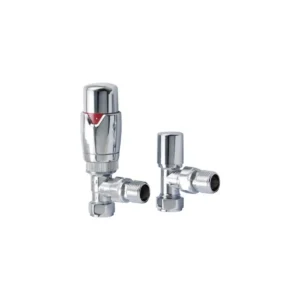
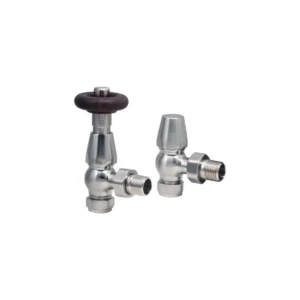
Angled radiator valves are used when pipework comes from the wall and needs to connect neatly into the side or underside of a radiator or heated towel rail. Their 90-degree shape keeps the connection compact, which is useful in bathrooms where exposed pipework should look tidy. They are a common choice for wall-mounted towel rails and modern radiator installations. Match the valve finish with the rail, as chrome, black, brass or anthracite valves can change how polished the whole fitting looks.
-
Angled Radiator Valves, Brushed Brass Radiator Valves, Heated Towel Rails, Manual Radiator Valves, Radiator Valves, Radiator Valves by Finish
Scudo Brushed Brass Angled Manual Towel Rail Valves Pair
Original price was: £53.00.
Our Price: £25.49Current price is: £25.49. -
Angled Radiator Valves, Anthracite Radiator Valves, Heated Towel Rails, Manual Radiator Valves, Radiator Valves, Radiator Valves by Finish
Scudo Carbon Anthracite Angled Round Manual Towel Rail Valves Pair
Original price was: £42.00.
Our Price: £20.49Current price is: £20.49. -
Angled Radiator Valves, Anthracite Radiator Valves, Heated Towel Rails, Manual Radiator Valves, Radiator Valves, Radiator Valves by Finish
Scudo Carbon Anthracite Manual Angled Towel Rail Valves Pair
Original price was: £42.00.
Our Price: £21.99Current price is: £21.99. -
Angled Radiator Valves, Chrome Radiator Valves, Heated Towel Rails, Manual Radiator Valves, Radiator Valves, Radiator Valves by Finish
Scudo Chrome Angled Round Manual Towel Rail Valves Pair
Original price was: £24.00.
Our Price: £15.99Current price is: £15.99. -
Angled Radiator Valves, Anthracite Radiator Valves, Heated Towel Rails, Radiator Valves, Radiator Valves by Finish, TRV Radiator Valves
Scudo Designer Round Anthracite Angled TRV Valves Pair
Original price was: £81.00.
Our Price: £38.99Current price is: £38.99. -
Angled Radiator Valves, Brushed Brass Radiator Valves, Heated Towel Rails, Radiator Valves, Radiator Valves by Finish, TRV Radiator Valves
Scudo Designer Round Brushed Brass Angled TRV Valves Pair
Original price was: £81.00.
Our Price: £41.49Current price is: £41.49. -
Angled Radiator Valves, Chrome Radiator Valves, Heated Towel Rails, Radiator Valves, Radiator Valves by Finish, TRV Radiator Valves
Scudo Designer Round Chrome Angled TRV Valves Pair
Original price was: £81.00.
Our Price: £38.99Current price is: £38.99. -
Angled Radiator Valves, Black Radiator Valves, Heated Towel Rails, Radiator Valves, Radiator Valves by Finish, TRV Radiator Valves
Scudo Designer Round Matt Black Angled TRV Valves Pair
Original price was: £81.00.
Our Price: £38.99Current price is: £38.99. -
Angled Radiator Valves, Heated Towel Rails, Radiator Valves, Radiator Valves by Finish, TRV Radiator Valves, White Radiator Valves
Scudo Designer Round White Angled TRV Valves Pair
Original price was: £81.00.
Our Price: £38.99Current price is: £38.99. -
Angled Radiator Valves, Black Radiator Valves, Heated Towel Rails, Manual Radiator Valves, Radiator Valves, Radiator Valves by Finish
Scudo Matt Black Angled Round Manual Towel Rail Valves Pair
Original price was: £42.00.
Our Price: £20.49Current price is: £20.49. -
Angled Radiator Valves, Heated Towel Rails, Radiator Valves, TRV Radiator Valves
Scudo Satin Nickel Designer Angled Wood Head TRV Valve Pair
Original price was: £115.00.
Our Price: £50.99Current price is: £50.99.