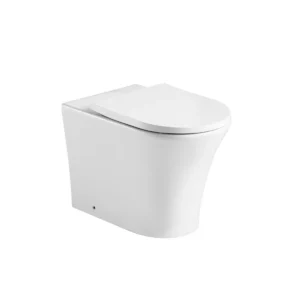
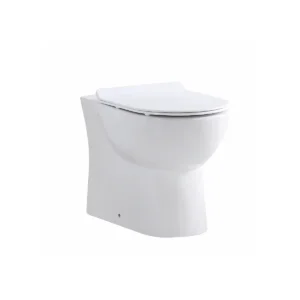
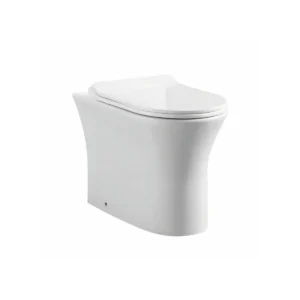
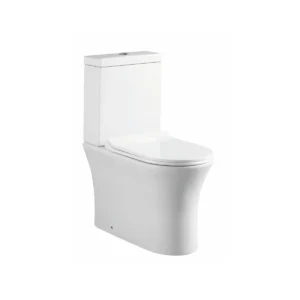
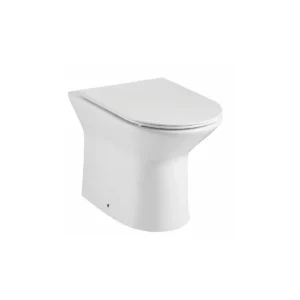
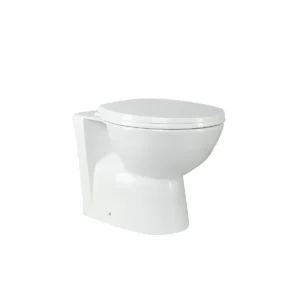
Softer toilet shapes can make the WC area feel less angular, especially in compact bathrooms. Round back to wall toilets have a curved pan profile that suits cloakrooms, en-suites and bathrooms with rounded basins or softer fittings. The back to wall design helps hide pipework and works neatly with concealed cisterns or WC furniture. Round back to wall toilets gives the room a clean fitted finish with a gentler overall shape.
-
Back to Wall Toilets, Rimless Back to Wall Toilets, Rimless Toilets, Round Back to Wall Toilets, Toilets
Kartell Kameo Back-to-Wall Curved Rimless Toilet Pan
Original price was: £215.00.
Our Price: £138.49Current price is: £138.49. -
Back to Wall Toilets, Close Coupled Toilets, Rimless Back to Wall Toilets, Rimless Close Coupled Toilets, Rimless Toilets, Round Back to Wall Toilets, Toilets
Kartell Kameo Closed Back Full Back-to-Wall Rimless Toilet
Original price was: £229.00.
Our Price: £137.95Current price is: £137.95. -
Back to Wall Toilets, Rimless Back to Wall Toilets, Rimless Toilets, Round Back to Wall Toilets, Toilets
Kartell Ozone Rimless Back-to-Wall Curved Toilet Pan
Original price was: £125.00.
Our Price: £92.95Current price is: £92.95. -
Back to Wall Toilets, Rimless Back to Wall Toilets, Rimless Toilets, Round Back to Wall Toilets, Toilets
Scudo Belini Rimless Curved Back-To-Wall Toilet Pan
Original price was: £300.00.
Our Price: £148.49Current price is: £148.49. -
Back to Wall Toilets, Comfort Height Back to Wall Toilets, Comfort Height Toilets, Rimless Back to Wall Toilets, Rimless Toilets, Round Back to Wall Toilets, Toilets
Scudo Deia Rimless Comfort Height Back-To-Wall Toilet
Original price was: £362.00.
Our Price: £174.99Current price is: £174.99. -
Back to Wall Toilets, Comfort Height Back to Wall Toilets, Comfort Height Toilets, Rimless Back to Wall Toilets, Rimless Toilets, Round Back to Wall Toilets, Toilets
Scudo Deia Rimless Comfort Height Closed Back-To-Wall Toilet
Original price was: £379.00.
Our Price: £196.49Current price is: £196.49. -
Back to Wall Toilets, Rimless Back to Wall Toilets, Rimless Toilets, Round Back to Wall Toilets, Toilets
Scudo Middleton Rimless Back-to-Wall Curved Toilet Pan
Original price was: £278.00.
Our Price: £142.99Current price is: £142.99. -
Back to Wall Toilets, Round Back to Wall Toilets, Toilets
Scudo Pronto Complete Back-to-Wall Curved Toilet Set
Original price was: £169.99.
Our Price: £92.49Current price is: £92.49.