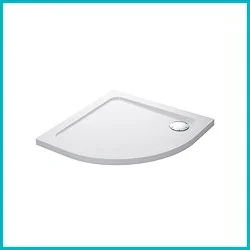
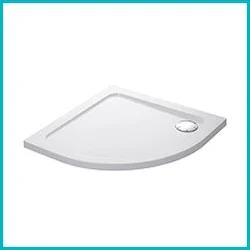
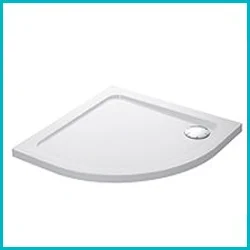
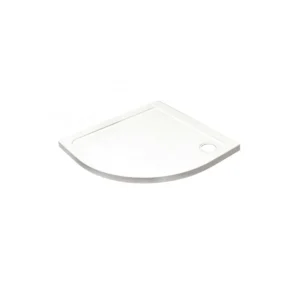
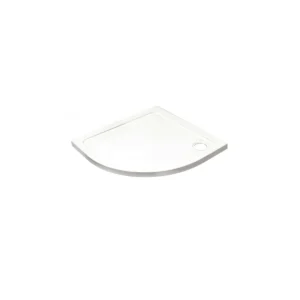
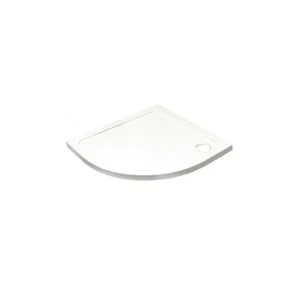
Quadrant shower trays are a smart choice for corner shower spaces, using a curved front to save room compared with a standard square tray. Their rounded shape helps create a practical shower area in smaller bathrooms, cloakrooms and en-suites while keeping the overall look neat and polished. Paired with matching quadrant doors, they offer a compact enclosure that feels streamlined rather than cramped. When floor space is limited, a curved corner shower tray helps make the most of the room.

Filter

TAILS’ SHAPE CHECK

Use corner space with a softer footprint

Quadrant shower trays combine two straight wall-facing edges with a curved front, creating a corner showering area that can feel less intrusive than a square enclosure. They are a useful purchase for bathrooms where circulation space matters, provided the tray dimensions, curve and enclosure configuration are matched correctly.

Are Quadrant Shower Trays Right for Your Corner?

Compare enclosure compatibility, floor space and curved-front proportions

A Quadrant Shower Tray Suits You If

The enclosure sits in a corner

The two straight sides are intended to meet adjacent walls, while the curved edge faces into the room. This format makes efficient use of a corner without presenting the full projecting corner found on a square shower tray.

Floor clearance is important

A curved-front shower tray can improve movement around nearby sanitaryware, furniture or door openings. It is particularly useful when a square footprint would create an awkward pinch point, although the actual clearance depends on the selected size.

You can match the enclosure

Buying the tray and quadrant enclosure with confirmed compatible dimensions helps align the frame, curve and wall positions. Check the individual product drawings rather than relying only on matching headline widths, as corner radii and tolerances can differ.

Another Shower Tray Shape May Suit You Better If

The shower is not corner-positioned

A standard quadrant format depends on two adjoining walls for its intended layout. A rectangular, square or other installation-specific tray may be more suitable when the enclosure sits in a recess, along one wall or within a more open arrangement.

You need an asymmetric footprint

Standard quadrant trays generally create a balanced corner footprint. An offset quadrant configuration may use the available wall length more effectively where one side of the showering area needs to extend further than the other.

Your enclosure curve is unknown

Two products described by the same nominal size will not automatically share an identical curved front. Do not purchase a replacement tray until the enclosure dimensions, radius, waste position and installation requirements have been checked against the manufacturer’s drawing.

Quadrant Shower Tray FAQs

Sizing, enclosure matching and replacement considerations explained

  • Will any quadrant enclosure fit the tray?

    No. The enclosure must match the tray’s overall dimensions and curved-front profile. Confirm compatibility using the manufacturer’s stated measurements, as products with similar advertised sizes may use different radii, frame positions or installation tolerances.

  • Are quadrant shower tray sizes exact?

    The listed size may be nominal, so use the technical drawing for precise dimensions. Check both straight wall edges, the curved projection and the waste position before setting pipework or preparing the surrounding walls and floor.

  • Can I replace an existing quadrant tray?

    Yes, but only when the replacement suits the enclosure curve, wall spacing, waste connection and finished floor level. A different profile can prevent the enclosure from seating correctly, even when the stated width appears to match.

DESIGNER’S NOTE

Position the curved front where it preserves the clearest walking route, then align nearby tiles and furniture with the tray’s straight wall edges for visual order.