
-
Angled Radiator Valves, Brushed Brass Radiator Valves, Heated Towel Rails, Radiator Valves, Radiator Valves by Finish, TRV Radiator Valves
Scudo Designer Round Brushed Brass Angled TRV Valves Pair
Original price was: £81.00.
Our Price: £41.49Current price is: £41.49. -
Angled Radiator Valves, Chrome Radiator Valves, Heated Towel Rails, Radiator Valves, Radiator Valves by Finish, TRV Radiator Valves
Scudo Designer Round Chrome Angled TRV Valves Pair
Original price was: £81.00.
Our Price: £38.99Current price is: £38.99. -
Angled Radiator Valves, Black Radiator Valves, Heated Towel Rails, Radiator Valves, Radiator Valves by Finish, TRV Radiator Valves
Scudo Designer Round Matt Black Angled TRV Valves Pair
Original price was: £81.00.
Our Price: £38.99Current price is: £38.99. -
Black Radiator Valves, Corner Radiator Valves, Heated Towel Rails, Radiator Valves, Radiator Valves by Finish, TRV Radiator Valves
Scudo Designer Round Matt Black Corner TRV Valves Pair
Original price was: £92.00.
Our Price: £42.49Current price is: £42.49. -
Black Radiator Valves, Heated Towel Rails, Radiator Valves, Radiator Valves by Finish, Straight Radiator Valves, TRV Radiator Valves
Scudo Designer Round Matt Black Straight TRV Valves Pair
Original price was: £87.00.
Our Price: £41.49Current price is: £41.49. -
Chrome Radiator Valves, Corner Radiator Valves, Heated Towel Rails, Radiator Valves, Radiator Valves by Finish, TRV Radiator Valves
Scudo Designer Round Polished Chrome Corner TRV Valves Pair
Original price was: £92.00.
Our Price: £42.49Current price is: £42.49. -
Chrome Radiator Valves, Heated Towel Rails, Radiator Valves, Radiator Valves by Finish, Straight Radiator Valves, TRV Radiator Valves
Scudo Designer Round Polished Chrome Straight TRV Valves Pair
Original price was: £87.00.
Our Price: £41.49Current price is: £41.49. -
Angled Radiator Valves, Heated Towel Rails, Radiator Valves, Radiator Valves by Finish, TRV Radiator Valves, White Radiator Valves
Scudo Designer Round White Angled TRV Valves Pair
Original price was: £81.00.
Our Price: £38.99Current price is: £38.99. -
Corner Radiator Valves, Heated Towel Rails, Radiator Valves, Radiator Valves by Finish, TRV Radiator Valves, White Radiator Valves
Scudo Designer Round White Corner TRV Valves Pair
Original price was: £92.00.
Our Price: £42.49Current price is: £42.49. -
Heated Towel Rails, Radiator Valves, Radiator Valves by Finish, Straight Radiator Valves, TRV Radiator Valves, White Radiator Valves
Scudo Designer Round White Straight TRV Valves Pair
Original price was: £87.00.
Our Price: £41.49Current price is: £41.49. -
Angled Radiator Valves, Black Radiator Valves, Heated Towel Rails, Manual Radiator Valves, Radiator Valves, Radiator Valves by Finish
Scudo Matt Black Angled Round Manual Towel Rail Valves Pair
Original price was: £42.00.
Our Price: £20.49Current price is: £20.49. -
Black Radiator Valves, Heated Towel Rails, Manual Radiator Valves, Radiator Valves, Radiator Valves by Finish, Straight Radiator Valves
Scudo Matt Black Straight Manual Round Towel Rail Valves Pair
Original price was: £42.00.
Our Price: £20.49Current price is: £20.49.

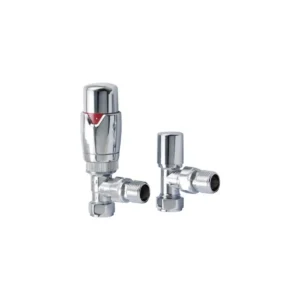


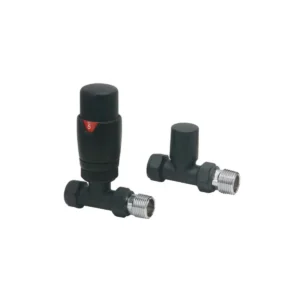


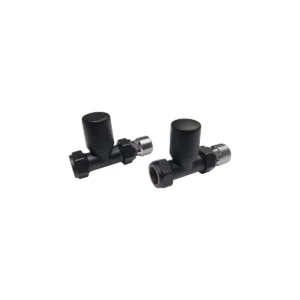

Shop Radiator Valves by Type

TAILS’ RADIATOR VALVE TIP
Work From the Pipework Out
The nicest-looking radiator valve is no use if the body does not suit the way the pipes meet the radiator. Check the pipe position and radiator connections first. Once the valve arrangement is right, you can decide how you want to control the heat and which finish looks best beside the radiator or towel rail.
Which Radiator Valve Shape Do You Need?
Follow the direction of the connections
Angled valves
Angled radiator valves turn the connection through the valve body. They suit installations where the incoming pipe and radiator connection need to meet at an angle.
Straight valves
Straight radiator valves keep the flow path in line through the valve. They are used where the pipework and radiator connection line up for that type of fitting.
Corner valves
Corner radiator valves offer another compact connection arrangement where their orientation suits the pipework. They can be particularly neat where the valves remain visible beside a towel rail.
Manual or Thermostatic Control?
Choose how the radiator responds
TRV radiator valves
A thermostatic radiator valve reacts to the temperature around its head and adjusts the flow through the radiator. Browse TRV radiator valves if you want that automatic local control.
Manual radiator valves
A manual radiator valve stays at the position you set until it is adjusted again. It is the simpler choice when direct control is all the installation requires.
Choosing Valves for a Heated Towel Rail
Treat the valves as part of the rail
Check both lower connections
Towel rail valves are often clearly visible at the bottom of the rail, so check exactly where the pipework will meet each connection. This determines the valve body you need and how much of the fitting will remain on show.
Check what comes as a set
Valve products may be supplied as pairs or with different components for each side of the radiator. Check the listing carefully so you know whether the lockshield or matching second valve is included before the installation starts.
Pick a Finish That Looks Intentional
The valves are part of the finished radiator
Match the radiator
Matching valve and radiator finishes is the safest route when you want the installation to feel consistent, especially with black, anthracite or white towel rails.
Pick up the brassware
A contrasting valve can work when it deliberately repeats another finish in the room. Brushed brass valves, for example, can connect the towel rail visually with matching taps or shower fittings.
Compare the finish range
Browse radiator valves by finish for anthracite, black, brushed brass, chrome and white options.
Check These Before Ordering
A valve needs to fit more than the colour
Connection arrangement
Confirm the direction of the pipes and the position of the radiator connections before choosing angled, straight or corner valves.
Sizes and compatibility
Check the valve specification against the radiator connection and pipework. Similar-looking valves can have different connection requirements.
Complete set
Make sure the order contains every valve and fitting needed for the radiator. If you are unsure about the heating-system requirements, confirm the setup with the installer before buying.
DESIGNER’S NOTE
On a towel rail, we treat the valves as part of the finished product rather than something to hide afterwards. Matching the rail is usually the cleanest option, but repeating another deliberate metal finish in the bathroom can work just as well. What tends to look accidental is introducing a third finish for the valves alone.

Radiator Valve FAQs
A few final checks
Do radiator valves come in pairs?
Some are supplied as pairs or matching sets, while others are sold individually. Check exactly what the product includes, particularly whether a matching lockshield valve is supplied for the opposite side of the radiator.
Will any radiator valve fit a towel rail?
No. The connection size, valve body and pipework arrangement all need to suit the towel rail and installation. Check the specifications before choosing a valve on appearance alone.
Can radiator valves be replaced without changing the radiator?
Often they can, provided the replacement valves suit the existing connections and heating system. The system may need to be isolated or drained during the work, so the fitting method should be confirmed before replacement.
Do radiator valves have to match the towel rail?
No. Matching gives a consistent finish, but a contrasting valve can work when it repeats another deliberate finish in the bathroom. The important thing is for the choice to look connected to the rest of the scheme.
