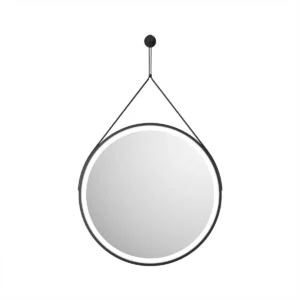
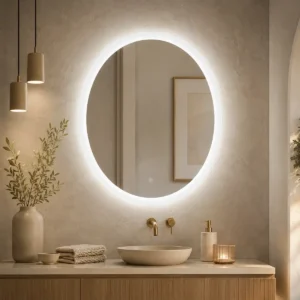
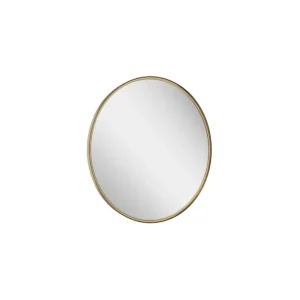
A curved profile softens tiled walls, square basins and angular furniture, giving round bathroom mirrors an easy, balanced presence above vanity units. Their shape draws the eye without feeling harsh, so they suit cloakrooms, en-suites and family bathrooms alike. Larger styles bring more impact, while smaller options keep compact wash areas uncluttered. Match a circle shaped bathroom wall mirror with curved brassware or rounded accessories for a gentler, cohesive look.
TAILS’ SHAPE TAKE
Soften straight lines above the basin
Round bathroom mirrors introduce a clear circular outline that contrasts neatly with rectangular basins, tiles and furniture. Their curved shape creates a softer focal point above a vanity or washbasin, while the range of available diameters lets you select a mirror that feels deliberate rather than undersized or overpowering.
Are Round Bathroom Mirrors Right for Your Basin Area?
Compare diameter, wall proportions and alignment with your furniture
The room has many straight edges
A circular bathroom mirror can break up the repeated horizontal and vertical lines created by cabinetry, wall tiles and sanitaryware. This contrast works especially well when the basin area needs a softer visual centre without adding another strongly rectangular element.
You can centre the circle
Round mirrors look most considered when their centre aligns with the basin, tap or vanity below. A clear central position gives the circular outline enough surrounding wall space and prevents the installation from appearing accidentally shifted to one side.
You have checked the diameter
Shopping by diameter helps you compare the mirror with the furniture width and available wall height. A well-proportioned round wall mirror for a bathroom should provide useful reflection while leaving intentional space around its curved outer edge.
Your vanity is particularly wide
One circular vanity mirror may look too narrow above a broad furniture run or double-basin arrangement. A wider rectangular mirror, or two carefully positioned round mirrors, may relate more convincingly to the width and number of washing positions below.
Usable reflection is the priority
A circle loses viewing area at its upper corners compared with a rectangular mirror of similar overall width and height. Another shape may suit better when several users need a broad reflective surface or the available wall area is tightly restricted.
The wall space is asymmetrical
A door frame, tall cabinet or sloping ceiling can make a centred circular outline difficult to achieve. An oval or rectangular mirror may use an uneven wall section more effectively and align more naturally with the surrounding architectural lines.
Round Bathroom Mirror FAQs
Diameter, positioning and furniture proportions explained
-
How wide should a round bathroom mirror be?
The appropriate diameter depends on the basin or vanity width and the wall margins you want to retain. Measure the exact available space and compare it with the individual mirror dimensions rather than selecting solely by a broad small, medium or large description.
-
Should the mirror be narrower than the vanity?
Usually, a round mirror that is narrower than the vanity creates clearer visual margins, but this is not a fixed rule. Check the complete arrangement, including taps, wall lights and tall units, to judge whether the circle feels balanced above the furniture.
-
Can a circular mirror suit a small bathroom?
Yes. A compact circular bathroom mirror can provide a useful focal point without introducing strong corners into a restricted wall area. Confirm that its diameter still gives enough reflection and that the curved edge clears nearby cabinets, shelves and door frames.
DESIGNER’S NOTE
Repeat the mirror’s curve through a rounded basin, globe light or arched accessory, while keeping the main furniture lines straight enough for the circle to remain distinctive.